
Showing posts with label Ritual. Show all posts
Showing posts with label Ritual. Show all posts
Tuesday, March 3, 2009

Monday, March 2, 2009


Monday, February 23, 2009

Friday, February 20, 2009
Ritual Project
Here are pictures of the pictures, sculpture, and drawing that were part of my ritual project on TV watching. Sadly, the sculpture is a little worse for the wear, and the drawing got warped/discolored when sculptures sat on top of it over the long weekend.


Tuesday, February 3, 2009
Ann Hamilton: Ritual
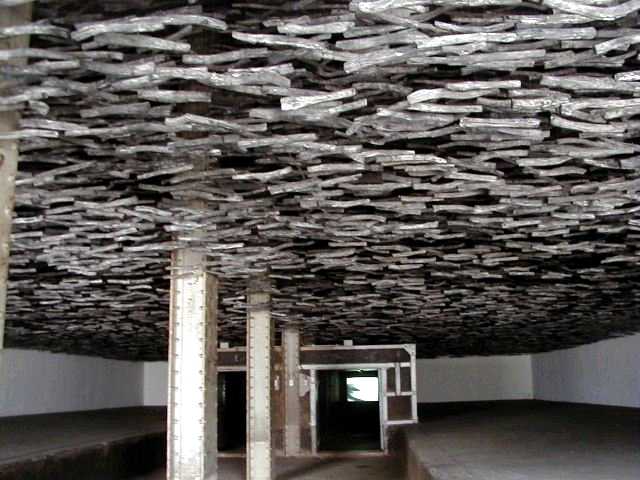
This piece by Ann Hamilton is entitled "The Picture Is Still." I guess what first caught my attention was the texture and sheer mass of the coal suspended from the ceiling, but in reading about it I think I found the most interesting aspect of this piece is how it was constructed. At Hamilton's request, the work was completed with 600 local volunteers over two weeks. I wonder if the process is just as important as the final result in such a case?
Ana Mendieta, Silueta
 This is a piece from Ana Mendieta’s Silueta Series created in Mexico in 1973-78. In this particular series, Mendieta takes the outline of her own body and marks or draws it into a natural setting using a variety of materials and techniques, including carved stone, molded earth or snow, rocks traced with flowers, blood and fire. By combining aspects of performance, the body, feminism and land art, Mendieta creates a distinct relationship between the female body and nature. In this image, the artist’s form is fused with the natural environment as it sinks into the sands of the beach. Generally, I believe the connection between nature and women represented in Mendieta’s work also comments on the female body’s ability to produce new life and a new beginnings. In this work the artist specifically symbolizes Yemayá, orisha of the ocean, who represents a “loving and wrathful” mother.
Sunday, February 1, 2009
commute 1 by Ann Hamilton

I love this photograph by Ann Hamilton because it’s content is so unexpected. The photograph is both terrifying and captivating, as the subject seems to be mid scream with hair to replace teeth. From a distance, the photograph can also appear to be a hollow eye. The contours in this picture are so interesting because the composition is so unforeseen.
Saturday, January 31, 2009
Matthew Barney
 This picture by Matthew Barney is amazing in its capture of brilliant dynamism in the absolutely still medium of photography. As an athlete and master of many visual art forms, he has united his interests with his talents to form this truly masterful image. This cluttered, almost futuristic room, combined with the man's flying, triumphant pose, imparts to the viewer a certain hopefulness along with feelings of awe, particularly toward the power of the human body.
Wednesday, January 28, 2009
 This image is from a Ann Hamilton performance in which each line of a book was burned out. This is a somewhat shocking ritual as books are usually treasured pieces of information. Perhaps she believes words are not the best way to express meaning, and therefore is getting rid of them. I like this particular image because you can actually see how hot the burning metal is in contrast to the darkness of the burned out lines of text.
Matthew Barney
 Barney's work as a performance artist, as shown in this photograph, is highly concentrated on relaying messages and content on dream states. Similar to Donovan, Barney chooses to relay these messages through material or form that is unconventional and perhaps unexpected. He uses deep symbolism through makeup and costume. However, at the same time, by using the human body, he is able to maintain a certain familiarity in form, as his messages are often about people and alternate consciousness.
Joseph Beuys
 Beuys makes use of many symbols in this piece titled "Homogenous Infiltration for Piano". First, we have a piano, an instrument of majestic creativity. The curved lines on the gray felt cover seem to have a muting effect, almost suffocating the piano and trapping the music inside. The rigid lines of the red cross contrast with the soft fabric, evoking thoughts of government aid, and instances when it can stifle creativity.
Joseph Beuys
 Joseph Beuys uses this perfectly well balanced sculpture of a lemon, a light socket, and a light bulb in Capri Batterie (1985). He is exploring the idea of what it means to have external energy source and what connects two objects that are completely different. I was fascinated with the idea of using the same color of two different objects together in a piece. They play off one another very well. The texture and the feeling is very different: one is hard, shiny, and smooth, while the other is bumpy and dull. Both pieces, however complimented each other well because there is a balance between the two.
Ann Hamilton

"ESL"
ESL is an extremely functional piece of art: it covers the floor of the foreign language section of the Seattle Public Library. The words on the floor, carved in raised type reading backwards from right to left, are first sentences from books in their original languages. The viewer can interpret the words with comprehension, confusion, or a combination of the two. This is reflected not only in their meanings, but in their appearance as a group: What seems like a wholly incomprehensible sea of backwards letters upon walking into the library reveals itself as truly systematic and logical. While the letters differ in typeface and size from one line of text to the next, each line contains an excerpt from one book in one language, printed in one direction in one font. If one could hover near the ceiling of the room and view the piece as a whole from that angle, it might seem even more organized: parallel lines of continuous text stretch from one end of the floor to the other. Interesting how something so seemingly complicated can be so simple.
Tuesday, January 27, 2009
Joseph Beuys

In Homogenous Infiltration for Piano (1966), Joseph Beuys encases the musical instrument in a swath of gray felt. In doing so, he makes us question the physical existence of the object itself. Is this a piano? or is it merely felt in the shape of a piano? How are we to know that a piano truly exists inside? It also brings up questions about the object's function. If the musical instrument is silenced by the felt encasing, does it cease to be a musical instrument?
Joseph Beuys: Ritual Artist
 "The End of The Twentieth Century," shown above, is a sobering piece. The chunks of stone suggest an anticlimactic--if not wholly backward--"end" to the 20th century. Crude forms of rock recall a primitive caveman-like era that seems to endure for man at the turn of the most recent century, untouched by technological advances and gilded "progress." Moreover, the uniform and coffin-like shape of the stones, each with a black circle where a face may be, suggest graves, bodies, or perhaps ruins. I interpret this piece as saying that after two World Wars and no shortage of poverty, deceit, treachery, or complacency, the twenty-first century will be built on a pile of cultural, social, and structural rubble. It seems Beuys alludes to the primitive brutality and ignorance exhibited by man over the last hundred years, and the destruction that should not be forgotten as the new century begins.
Hannah Wilke

I love the way in which the artist has successfully managed to depict an object which is so frequently depicted in a simplistic yet at the same time powerful manner. The use of watercolor gives the painting a sense of verisimilitude which makes it all the more palpable. It is particularly remarkable that the artist has not tried to idealize this almost cliche subject, but instead focuses only on the object in front of her.
Cremaster 3
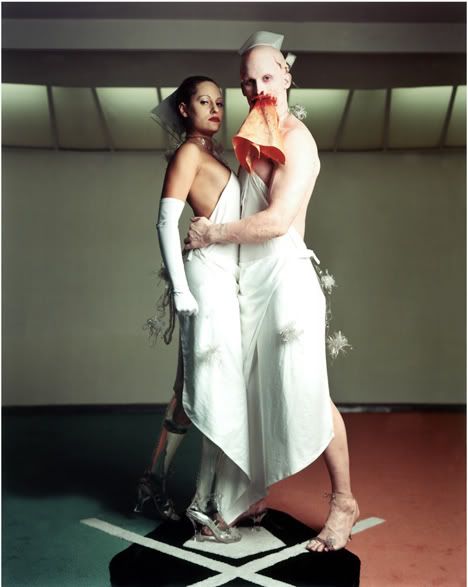
In "Cremaster 3", part of a series of art films created by Matthew Barney, the artist utilizes a series of dreamlike, seemingly vague allusions to institutions and ideologies in society whose operation or existence depend largely on ritual. As Barney himself scales the walls of the Guggenheim museum in elaborate costume, ascending the winding gallery space by literally climbing up between floors, the protagonist encounters settings and situations which seem to be continually reenacting the process of sexual differentiation, both on the physical and mental level, dramatizing the process and ritualizing it through the use of very specific choreography, and ornate and deeply symbolic costumes and set design. Some of the most disturbing but also thought-provoking scenes centrally figure a woman amputated from the knees down. While discomforting, I think this choice, the film, and this image all seem to be begging the question of what it means to be "whole" or "complete" in society, and how the process of attaining this goal of 'completion' often turns into a ritualistic repetition of acts, gestures or appearances which are largely culturally dictated.
Alex Arruda
Ana Mendieta
"Untitled (Blood Sign #2/Body Tracks)"
This short film was projected onto a white wall and the bloodied shirt the artist wears was hung nearby in the same gallery. The sight of blood is uncommon in most peoples’ everyday life. When we do see blood it is usually associated with either menstruation or an injury of some kind. Mendieta’s slow, controlled, silent movements are quite the opposite of the violence one might associate with blood on the walls. Medieta was a Cuban exile who was deeply involved in the feminist movement. The blood may represent menses and the large “V” on the wall could stand for vagina. The artist confronts us with a vivid representation of womanhood. I like how Mendieta blurs the line between acting in an art film, painting art, and actually being art herself. I also appreciate the coolness and tranquility of her body as she performs such a shocking act.
-David serota
Ritual- Ann Hamilton

This drew my attention just becuase I thought it was strange. After it caught my eye, I immediately wanted to know what was going on. This piece of art was done by Ann Hamilton and is titled "Untitled (body object)." The little information I found on this photograph had an interesting interpretation. It suggested that even though the women's eyes and ears are covered, it still conveys a message to the audience. Phrases like "basket case" or "head case" could be contrued by an observer. This relates to our first class where we discussed how art can be symbolic or give a message. I just found this really interesting.
RITUAL ARTIST: Ann Hamilton

This work is called "untitled (body object series) #5-bushhead” by Ann Hamilton. It is one out of a series of photographs where the artist is shown interacting with common objects or materials. The objects are all joined to the artist in one way or another. In this case Hamilton’s head is engulfed in a bush. I thought this piece was interesting because it comments on how we interact with the world around us. I also found interesting the concept that the photograph is “senseless” both in that the artist cannot see, hear or smell with a bush as a head and that the image itself is in a way nonsensical or fantastical.
Subscribe to:
Posts (Atom)